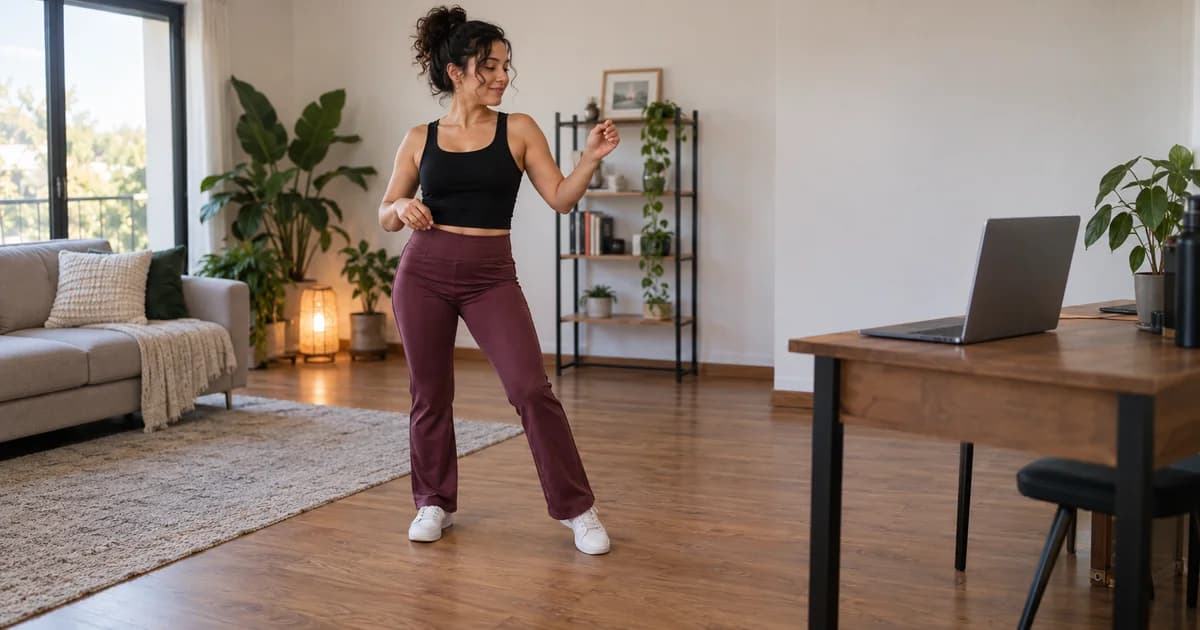
Online Bachata coaching gives you personal feedback through a camera. It is useful when you want to check a visible movement or keep practising while you travel. To choose it well, match the goal to what the teacher can see, hear and demonstrate remotely.
Who do online bachata lessons work for?
Online bachata lessons work for students who want feedback on timing, posture, basic step, body waves, isolations, styling, musicality, and practice structure. They also work well for dancers who travel, live outside Dubai, or need help between in-person classes.
If travel interrupts your studio practice, choose one movement to work on remotely and bring the feedback into your next in-person class.
| Skill | Online works well? | Needs in-person practice? | Why |
|---|---|---|---|
| Timing | Yes | Sometimes | A teacher can hear and see when you rush or lose the count |
| Musicality | Yes | Sometimes | Online work can train listening and accents before social dancing |
| Solo body movement | Yes | No | The camera can show posture, ribs, hips, and sequencing |
| Posture and frame | Partly | Yes | A teacher can see shape online, but cannot feel pressure |
| Partner connection | Limited when practising solo | Yes | A remote teacher cannot feel your frame; live partner response needs a partner with you |
| Social confidence | No | Yes | Confidence grows by dancing with different people |
| Floorcraft | No | Yes | You need a real room and other dancers nearby |
What can video feedback actually fix?
Video feedback can fix visible habits: stepping too large, losing timing, lifting shoulders, forcing body waves, collapsing posture, or rushing transitions. It can also show you problems that you cannot feel while dancing.
The limit is touch and pressure. A teacher can see your frame through video, but cannot fully feel your lead, follow, weight, or partner response. That is why online coaching works best as a technique support, not the only form of partner training.
Keep partner practice in the plan
If you are practising alone online, you still need a partner to learn how a lead or response feels. A teacher watching two dancers remotely can observe movement, but cannot physically feel their frame. If you plan to practise together, ask whether your proposed session can cover partnerwork.
For social confidence, floorcraft and adapting to different people, add practice in a real dance room. The first-class guide helps you prepare for that step.
What do you need for an online lesson?
You need a phone, tablet, or laptop with a camera, stable internet, enough clear space to step safely, and a full-body camera angle from head to foot. Wear comfortable clothes and smooth-soled shoes or socks if your floor allows safe movement.
Before class, test your camera position. If I can only see your upper body, I cannot correct weight transfer. If I can only see your feet, I cannot correct posture or body movement.
What should an online session focus on?
An online session should focus on one clear outcome. Good examples are timing cleanup, basic step, body-wave sequence, hip isolation, arms and styling, or a practice plan for a song. Too many goals make the feedback shallow.
For technique work, online lessons pair well with posts like body movement for beginners, body wave practice drills, and hip mobility exercises for dancers.
Online and in-person are both private formats
My online offering is live private coaching. The useful comparison is online versus in-person, rather than online versus private. Choose the format that can give you feedback on the problem you have.
For visible solo movement, the camera may be enough to start. For touch, pressure or adapting to partners, plan in-person work too. Check online lesson details before arranging your session.
Prepare one question for the camera
Record a short basic step or the movement you want help with, making sure your feet and upper body are visible. Notice where you lose timing or feel tense. That gives the lesson a clear starting point.