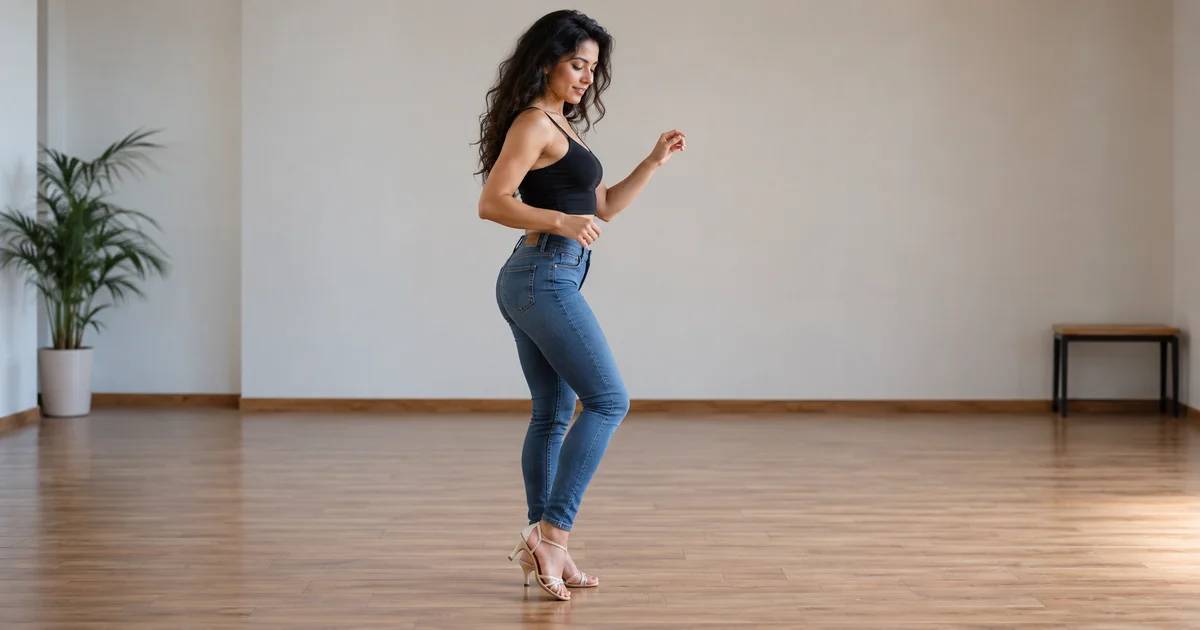
When checking a wave, I look at where the movement stops connecting. Work on that part slowly rather than repeating the whole wave with more effort. A side view in a mirror can help you see it.
What should a beginner body wave include?
A beginner bachata body wave should include posture, chest initiation, rib control, stomach release, pelvic action, breath, balance, and timing. Do not chase a dramatic shape before those pieces connect.
| Checklist item | What to check | Common problem |
|---|---|---|
| Posture | Knees soft, spine long, shoulders relaxed | Locking the knees or lifting the chest too high |
| Chest | Movement starts small and clear | Moving shoulders instead of ribs |
| Ribs | Motion travels through the middle body | Skipping from chest straight to hips |
| Stomach | Center releases without collapsing | Holding the breath and freezing |
| Pelvis | Pelvis finishes the wave gently | Forcing the lower back |
| Balance | Feet stay grounded | Rocking forward or backward |
| Timing | Wave fits the music | Rushing before the body is ready |
Why do most beginners struggle?
Tension can make the wave stiff. Check whether you are holding your breath or bracing before trying a larger movement.
Check whether you rush straight from chest to hips. If you do, pause the full wave and practice the rib movement separately before connecting it again.
Check the sequence from the side
Stand sideways to a mirror so you can see how the movement travels through your torso. Keep the wave small and slow. Notice whether the ribs follow the chest or whether the hips jump ahead.
Pause the full wave if you cannot see the connection. Work on one small chest or rib movement, then try joining it again. Reduce the range if the movement feels forced or uncomfortable.
Check your shoulders and knees
As you watch the wave, look for shoulders lifting, knees locking or the head moving before the chest. Keep the movement small enough to notice these details without straining.
Use short sets. Two minutes of focused mirror practice is better than 20 minutes of repeating the same forced pattern.
How should you practice with music?
Start with slow bachata and make one wave last several counts. If the movement becomes jerky, reduce the range and return to slow mirror practice before adding speed.
Count the 8-count aloud as you practice. Initiate the wave on count 1, let it travel through counts 2 and 3, and finish by count 4. The slowness forces control.
When you cannot see the cause
If the wave stays choppy or your lower back keeps taking over, bring a short side-view example to a teacher. Ask which segment to work on first. The private lesson guide helps you decide whether individual feedback fits your goal.
What should you practice next?
Once the wave becomes smoother, connect it to basic step, breath, music, and partner safety. Body waves are not isolated tricks. They belong inside Bachata Sensual timing and connection.
For the broader movement foundation, read body movement for beginners and hip mobility exercises for dancers.
Finish with a wave you can repeat
Try one small wave to the count, then repeat it without increasing the range. If you hold your breath or feel your lower back taking over, stop and ask for feedback before pushing further.