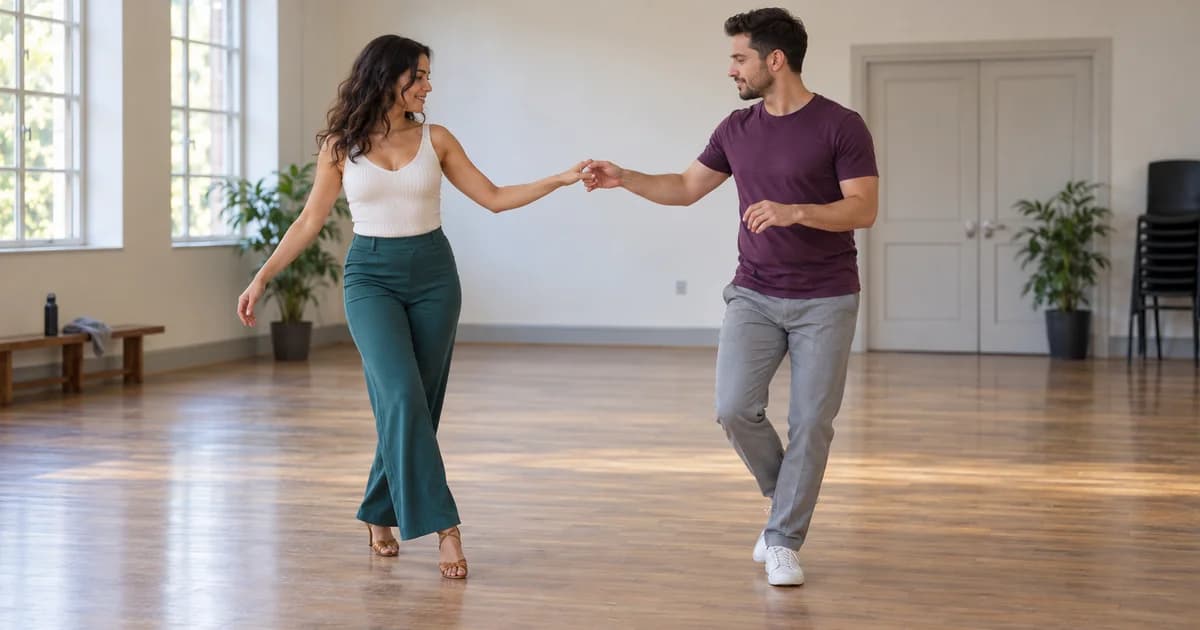
Partner connection drills give you a way to practice frame, weight shifts and timing without adding a complicated pattern. Start with small movements that both dancers can feel comfortably. Keep your own balance and ask your partner for feedback.
Can both of you feel the movement without needing more pressure?
For the role foundation behind these drills, read leading and following in Bachata Sensual. If you are practicing with a partner, the bachata for couples in Dubai guide can help you choose the right room and pressure level.
What is a good frame check?
A good frame check asks whether both dancers feel connected without gripping, hanging, or locking. Stand in dance position, breathe, soften the shoulders, and keep enough tone that a small weight shift can be felt.
Try this before moving your feet. The leader shifts weight slightly left and right. The follower notices the change without guessing the next step. Then switch roles so both dancers understand the feeling.
How do weight shift drills help?
Weight shift drills help because most leads begin in the body before they appear in the arms. If the leader shifts late or unclearly, the follower receives confusing information.
Practice side-to-side weight shifts with a partner in a basic hold. Keep the steps small. The leader prepares before moving. The follower waits until the shift is clear, then responds without jumping ahead.
How should beginners practice timing together?
Practice the slow basic with the usual count: 1, 2, 3, tap, 5, 6, 7, tap. Count aloud and notice whether both dancers transfer weight together. Dance Dojo's timing guide demonstrates the two groups of four.
If you want to check balance, stop the music and settle before starting again. Do not insert an extra one-count pause into the repeated basic and expect to stay on the same timing. If restarting to music is unclear, ask your teacher to count you in.
Can eyes-closed drills help?
Eyes-closed drills can help sensitivity only when they are supervised, consensual, and very simple. Use them standing still or with tiny weight shifts, not with turns, dips, or crowded social dancing.
The follower should be able to open their eyes at any moment. The leader should keep the movement small. If either dancer feels unsafe, stop immediately and use eyes-open practice instead.
What solo drills support partner connection?
Solo drills support connection by improving posture, balance, and weight transfer. Practice standing tall, shifting weight without collapsing, and stepping the basic while keeping your ribs, hips, and shoulders organized.
Wall drills can also help you feel whether your arms are pushing too much. Press your hands lightly into a wall, soften your shoulders, and notice whether your body can stay toned without tension.
What mistakes should you avoid?
Avoid pulling, gripping, guessing, rushing, and treating connection as a strength contest. If a movement does not work, simplify it before adding pressure.
Also avoid practicing advanced sensual movements without instruction. Connection drills should make dancing safer and clearer, not create bigger shapes before the basics are ready.
Repeat the drill with feedback
Choose the frame check or the weight-shift drill and ask your partner what feels clear. Change one thing, then try again. If neither of you can tell why the connection feels tense, bring that specific question to a lesson rather than adding more force.