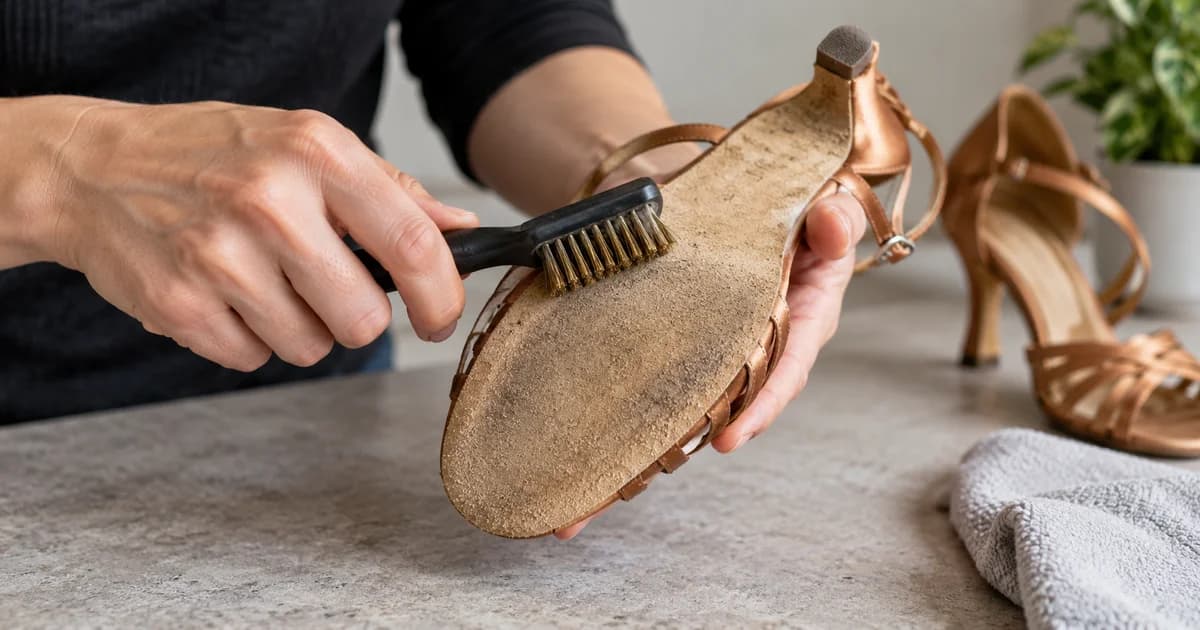
After class, let your dance shoes air before you close the bag. Then check the parts that affect your next dance: soles, straps, buckles and heel tips. Follow the maker's instructions for your particular material; indoor suede shoes and washable sneakers do not have the same care needs.
I would check the soles as soon as turns begin to feel different. A dirty sole or a loose strap is easier to notice before class than in the middle of a crowded social.
If you are still choosing your first pair, start with the dance shoes in Dubai guide. If you are deciding what to wear around the shoes, use the first bachata class outfit guide.
Why does dance shoe care matter?
Dance shoe care matters because your shoes affect grip, slide, balance, and comfort. If the soles are dirty, wet, or worn unevenly, turns can feel unpredictable. If the upper stretches too much, your foot may move inside the shoe.
How do you care for suede soles?
Care for suede soles by keeping them away from outdoor surfaces and brushing them when the nap becomes packed down. Use a suede or dance-shoe brush with light, controlled strokes rather than scraping aggressively.
If suede gets damp, let it dry naturally. Do not use a hair dryer or direct heat. Once dry, brush gently and test the shoe on the studio floor before dancing full-out.
How do you clean leather, satin, or fabric uppers?
Clean uppers based on material. Leather can usually be wiped with a lightly damp cloth. Satin needs very gentle spot cleaning. Fabric or canvas shoes may tolerate mild spot cleaning, but they still should not be soaked.
Always test a small hidden area first. If the shoe is expensive, delicate, or stained badly, ask a shoe repair shop before using strong products.
How should you store dance shoes in Dubai?
Store dance shoes only after they have aired out. Dubai humidity, sweat, and closed bags can create odor and weaken materials if shoes go straight from class into a sealed space.
Use a breathable shoe bag, not a plastic bag. Keep shoes out of direct sun and out of a hot parked car. If they are damp after class, leave them open at home until they are dry.
When should you repair or replace shoes?
Repair or replace shoes when the sole, heel, strap, buckle, or support stops feeling reliable. If you start adjusting the shoe during class, losing balance in familiar movements, or feeling uneven pressure, check the shoe before blaming your technique.
Heel tips and straps may be repairable. Soles may sometimes be refreshed or replaced. If the structure of the shoe has collapsed, replacement is usually safer and more comfortable.
What mistakes should you avoid?
Avoid wearing dance shoes outside, storing them wet, brushing suede too harshly, using strong cleaners, or sharing shoes that do not match your foot shape. Each habit can change the way the shoe supports and moves with you.
Also avoid waiting until a social to test a repair. Try repaired or new shoes in class first, where you can stop, adjust, and ask for feedback.
Check the shoes before packing your bag
Look at the soles, straps and heel tips, then try a few steps to check the fit. Set aside a pair that feels unstable until it has been repaired or replaced. If you are unsure about the material, follow the shoe maker's care instructions before using a cleaner or brush.